Slice
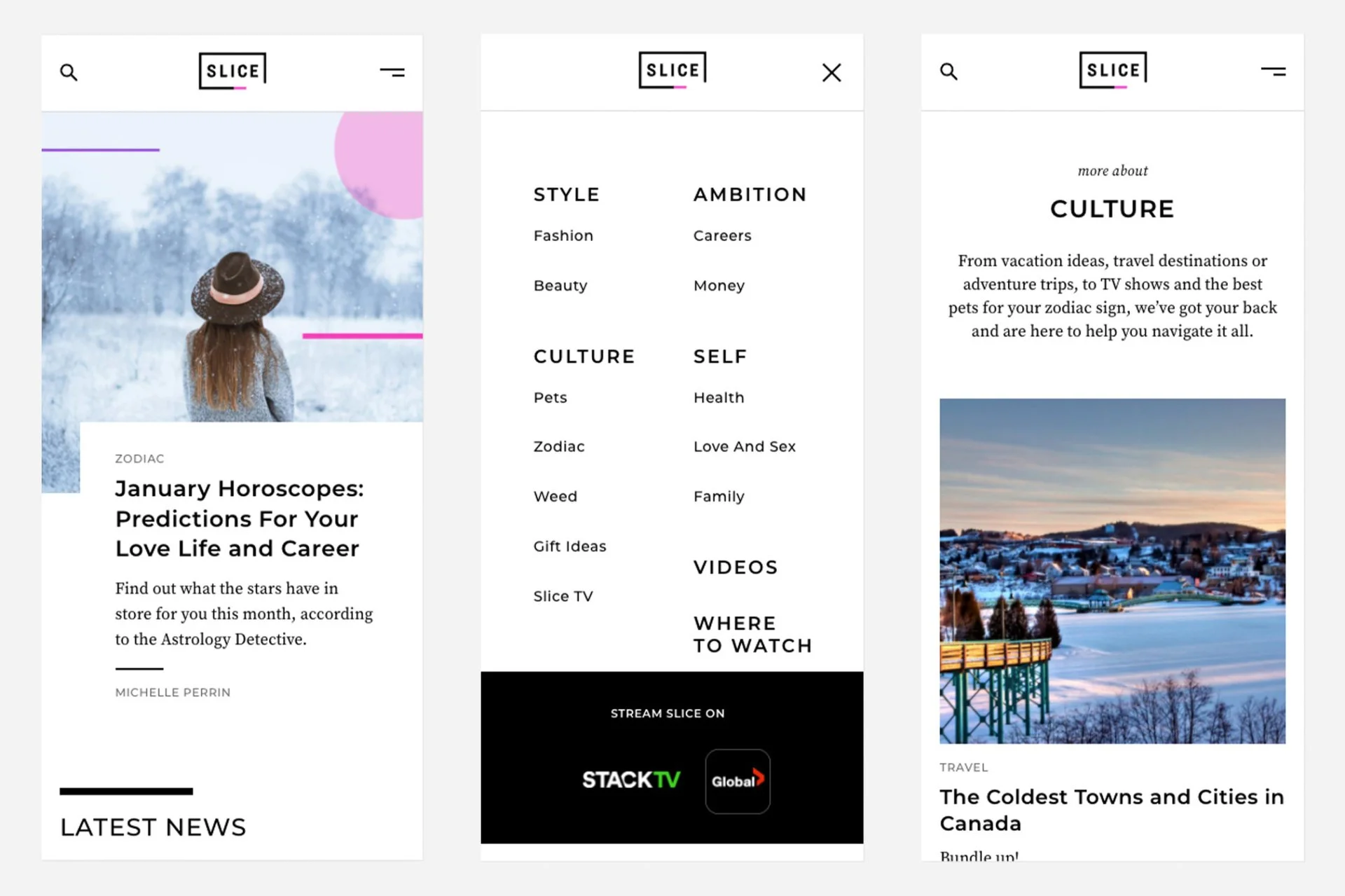
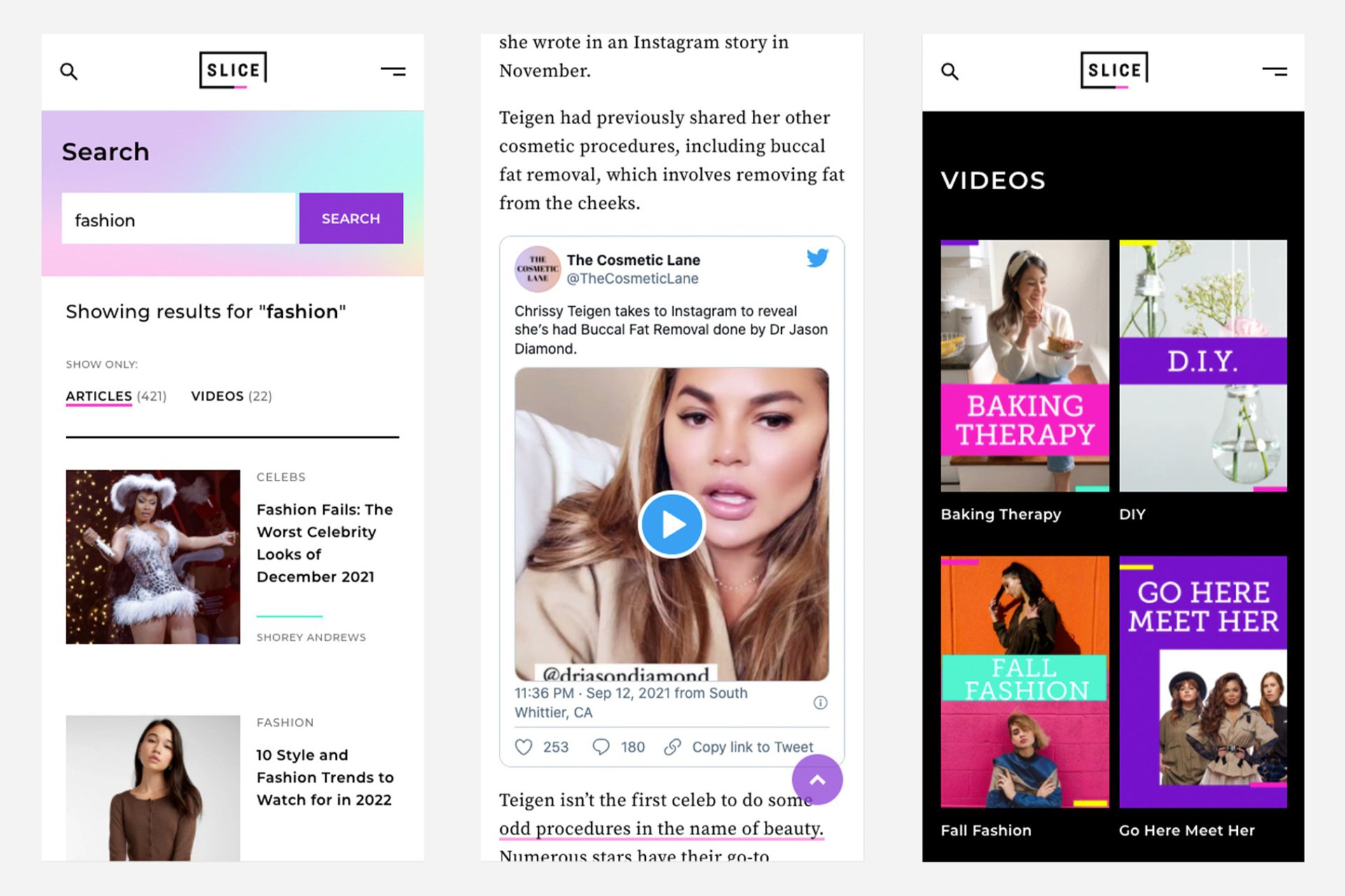
Slice was the first lifestyle brand I led through platform migration while working at Corus Entertainment. The project involved moving the website from .NET to WordPress while redefining the product’s role in a rapidly shifting media landscape. At the time, video content from the network was being pulled from the website, which meant Slice needed to rely more heavily on editorial content to drive engagement. This required rethinking how articles were discovered and consumed — particularly by a younger audience.
Client
Corus Entertainment
Years
2019 - 2020
The Challenge
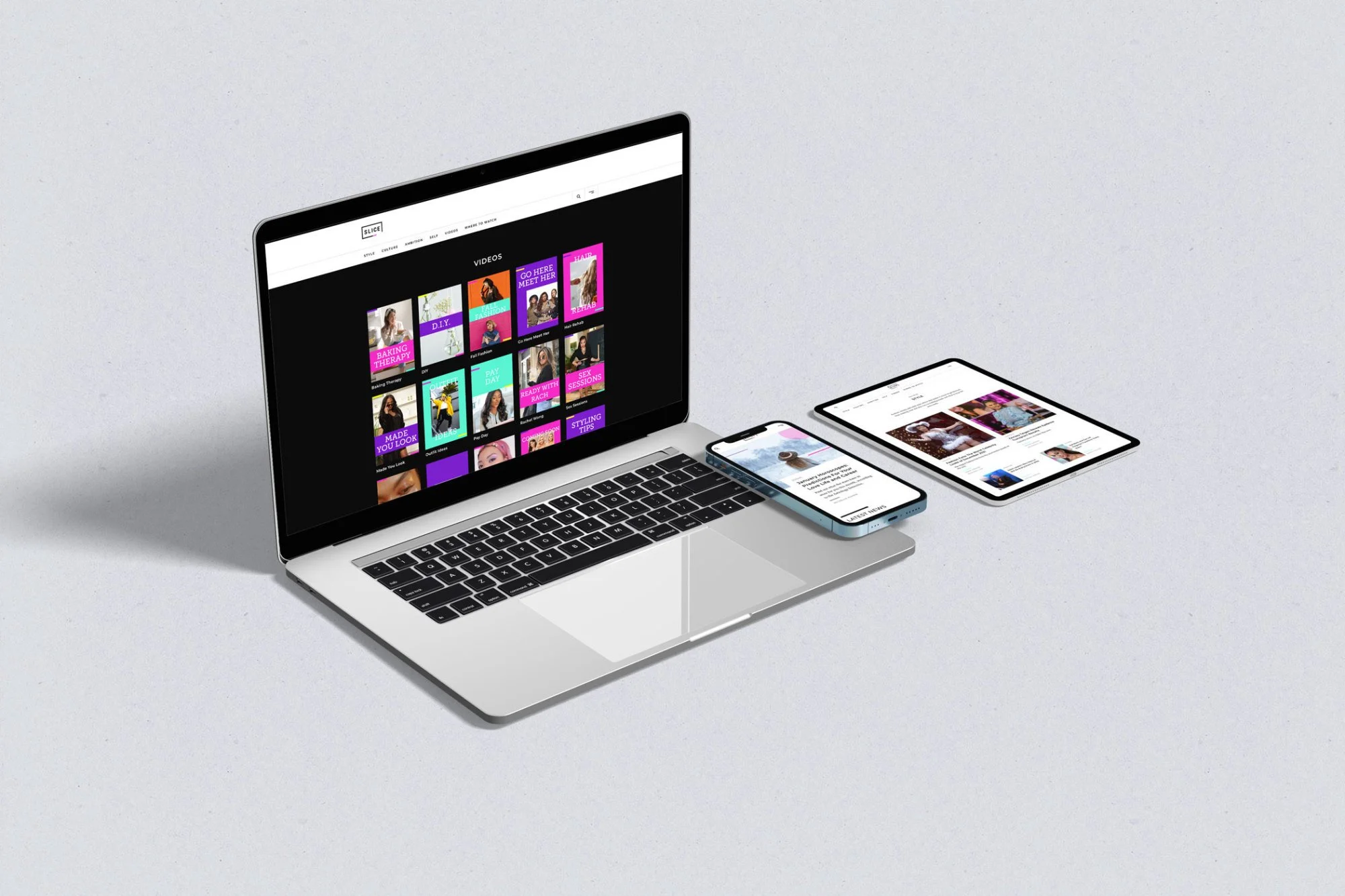
The Slice team wanted to significantly shift the audience demographic toward Gen Z readers while improving key engagement metrics such as page views, session duration, and repeat visits. However, the website had originally been designed for desktop consumption and was not optimized for how younger users interacted with digital content. With roughly 70% of visitors accessing the site on mobile devices, the experience needed to be rebuilt with mobile behaviours in mind. At the same time, the product needed to evolve beyond its reliance on video content and find new ways to generate engagement and revenue through editorial storytelling.
My Approach
The project began with a cross-department kickoff workshop to align stakeholders on the goals of the redesign and establish a shared vision for the new platform. One of the most significant strategic shifts that emerged from this conversation was the need to attract a younger audience without losing the brand’s existing voice. To better understand this target demographic, I conducted interviews with users who frequently consumed editorial content from competing lifestyle brands and digital publishers. These conversations focused on how users discovered articles, what kept them reading, and what caused them to abandon content. Through this research, a clear pattern emerged. Gen Z readers were far more likely to engage with content that was designed for mobile-first reading, delivered timely and culturally relevant topics, and came from voices they perceived as authentic and trustworthy. These insights informed the development of a primary persona, Sloan, along with a detailed user journey that mapped how younger readers moved from discovering an article to continuing deeper into the site.
Using these UX artifacts as a foundation, I designed mobile-first wireframes for the new Slice platform. The focus was on creating an editorial experience that encouraged discovery while making articles easy to scan and read on smaller screens. Throughout the design phase, I worked closely with a visual designer to refine the interface and conducted three rounds of usability testing using interactive prototypes. After each round, we iterated on the design to improve navigation clarity, readability, and overall engagement before handing the final designs to development.
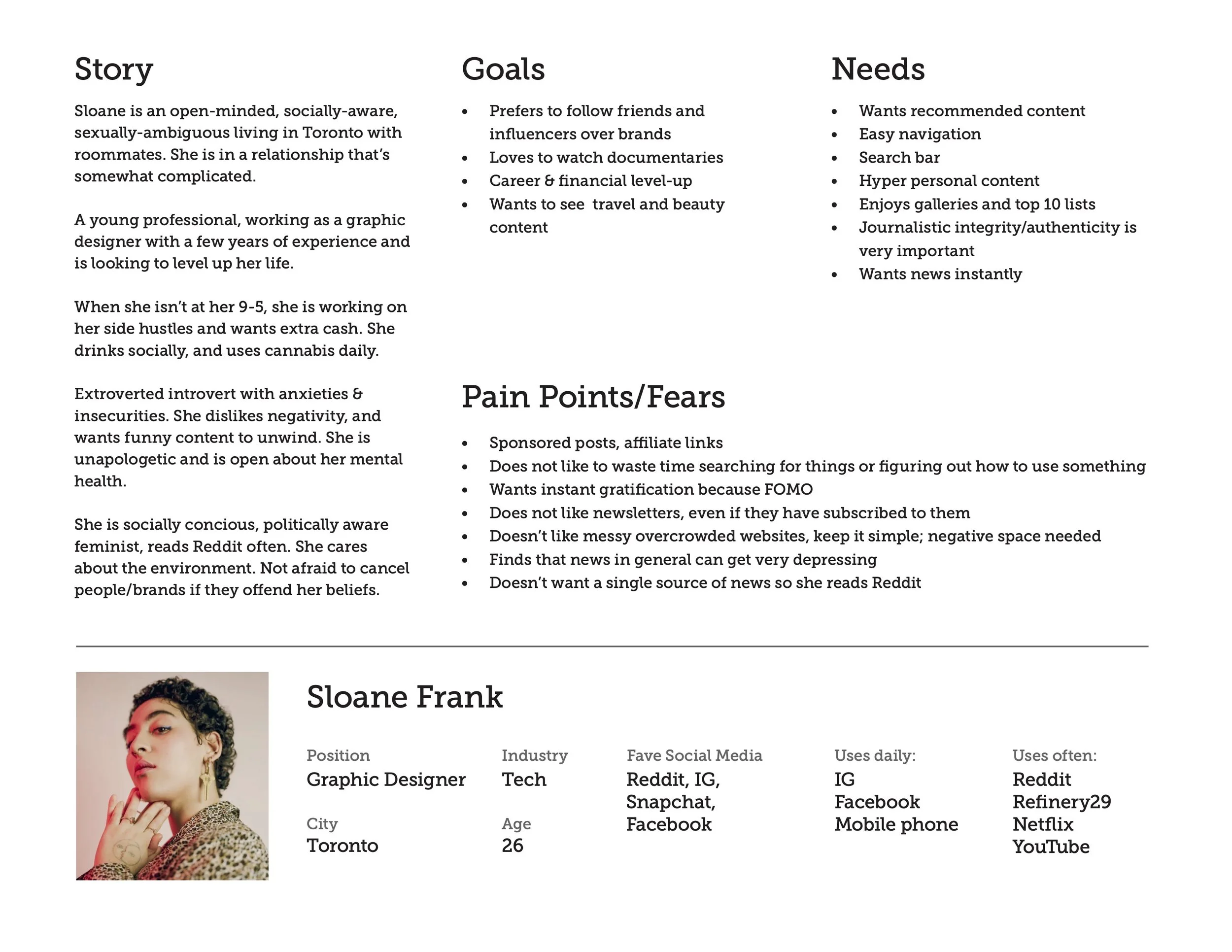
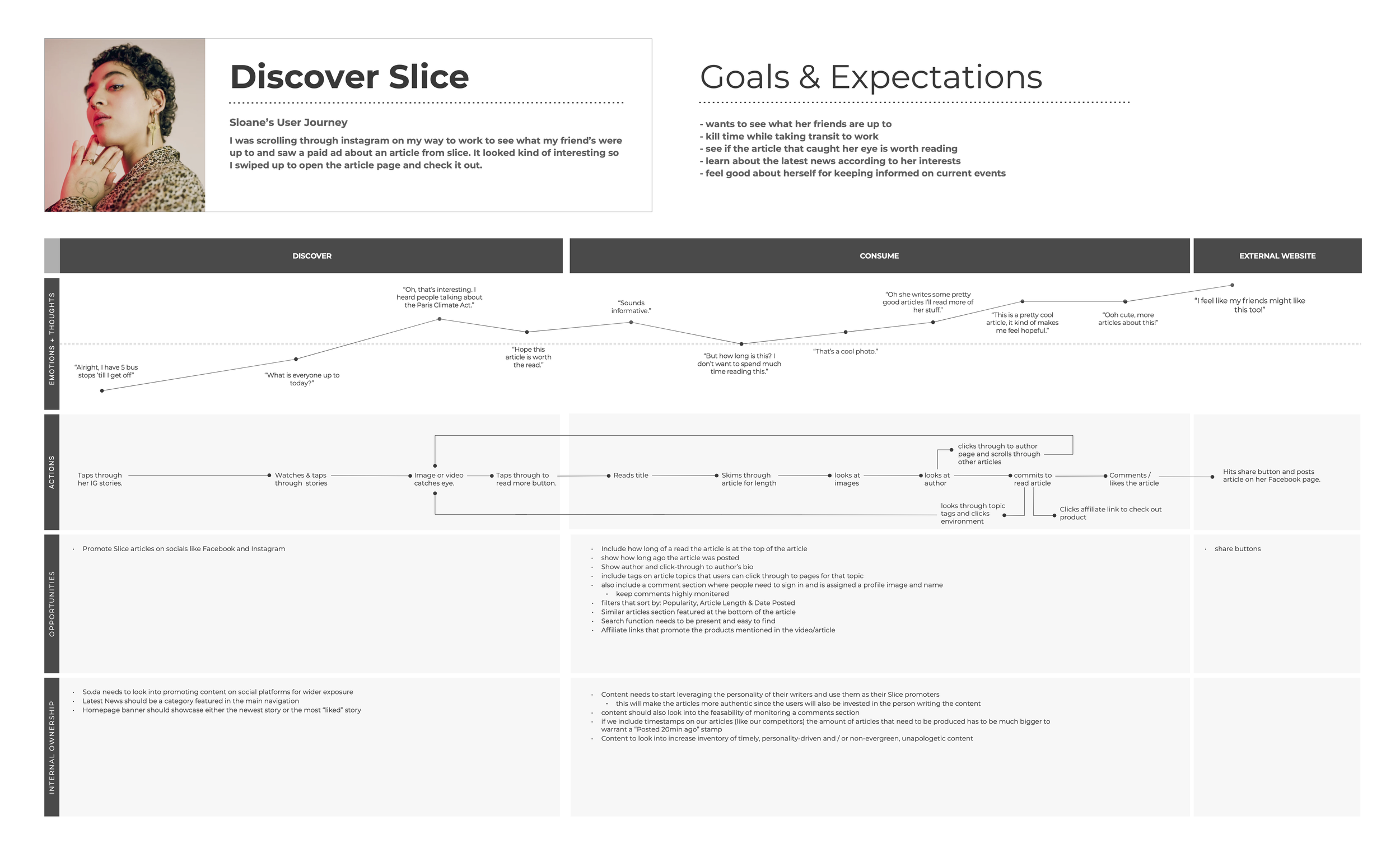
Final user persona and user journey was developed based on findings from user interviews and a proto-persona workshop I led with the editorial team.
Navigating Stakeholder Priorities
One of the biggest challenges during the project was managing competing expectations across departments. The content team had an extensive list of ideas and feature requests that went far beyond what could realistically be delivered within the timeline and budget. Working closely with the project manager, I helped organize these ideas into launch and post-launch initiatives. By prioritizing features that were most critical to the user journey, we were able to maintain momentum while ensuring the core experience remained focused and achievable.
Outcome
The new Slice website launched successfully and was soon recognized by the Canadian digital publishing industry. Shortly after launch, Slice was nominated for Best Website Design at the Canadian Online Publishing Awards, where it won Gold. Performance metrics also began improving within two weeks of launch:
Average time spent on site increased 44%
Average daily visits increased 14%
The redesign modernized the brand, created a stronger mobile reading experience, and helped position Slice as a competitive editorial destination for a younger audience.