PCGL
I led the UI design for the Data Access Compliance Office (DACO), an application platform within the national Pan-Canadian Genome Library (PCGL) initiative. DACO is the system academic researchers use to apply for access to controlled genomic data, often in support of cancer treatment studies or PhD research.
This work was part of a larger multi-team effort, with each team contributing a product to a shared national framework. My focus was on creating a usable, consistent interface that could be designed and built within a tight timeline while fitting into a broader ecosystem.
Client
Ontario Institute for Cancer Research
Years
2024 - Present
Context & Goals
Two constraints shaped this project from the start. First, the overall timeline was short, with just under a year from design to development and launch. Second, DACO needed to align visually and structurally with tools being built by other teams across PCGL.
The goals of the project were to:
design a clear and usable application experience for academic researchers
improve how feedback and application status were communicated
establish a shared UI foundation that other PCGL teams could build from
I led the UI design for DACO and worked closely with business analysts, genomic informaticians, and engineers. I was responsible for defining the user flow, creating wireframes and high-fidelity designs, and customizing an existing design system to fit PCGL’s branding and interaction needs.
Problem
The team had previously built an internal application website several years earlier. While functional, it relied heavily on email for communication and manual coordination between administrators and applicants.
Key pain points from the existing product included:
application updates were only sent by email
applicant feedback was handled manually outside the system
administrators had no way to leave notes or feedback for each other
At the same time, multiple teams across PCGL needed to design and build their own tools. Without a shared UI foundation, there was a risk that each product would evolve differently, creating inconsistency across the platform.
Discovery & Constraints
Because of the tight timeline and limited access to external users, formal usability testing with researchers was not feasible. Instead, we relied on:
feedback and data from the previous application system
domain expertise from genomic informaticians and business analysts
known operational pain points within the review process
This made it clear that the new system needed to reduce reliance on email, support clearer communication, and standardize interface patterns so teams could work in parallel.
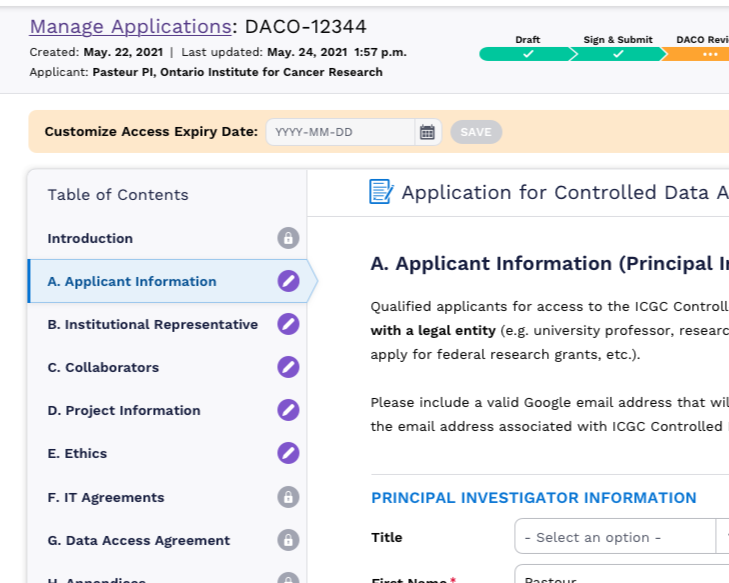
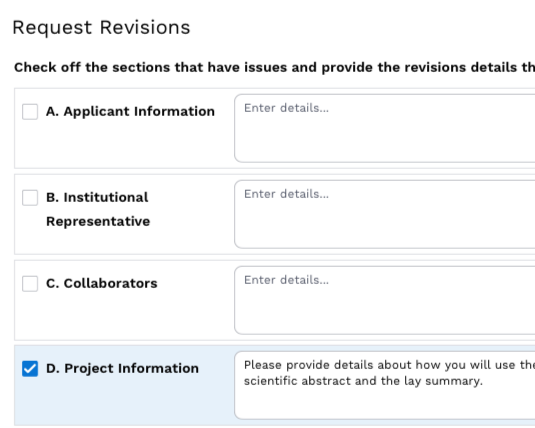
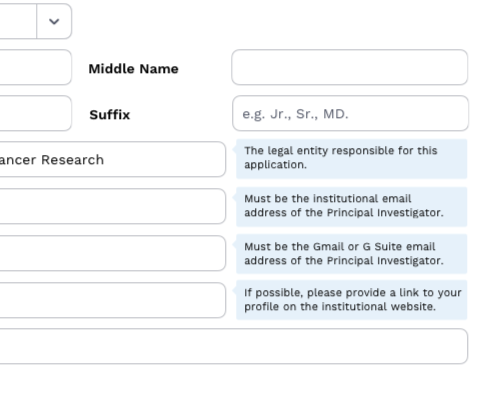
Examples of previous application submitter.
Design Approach
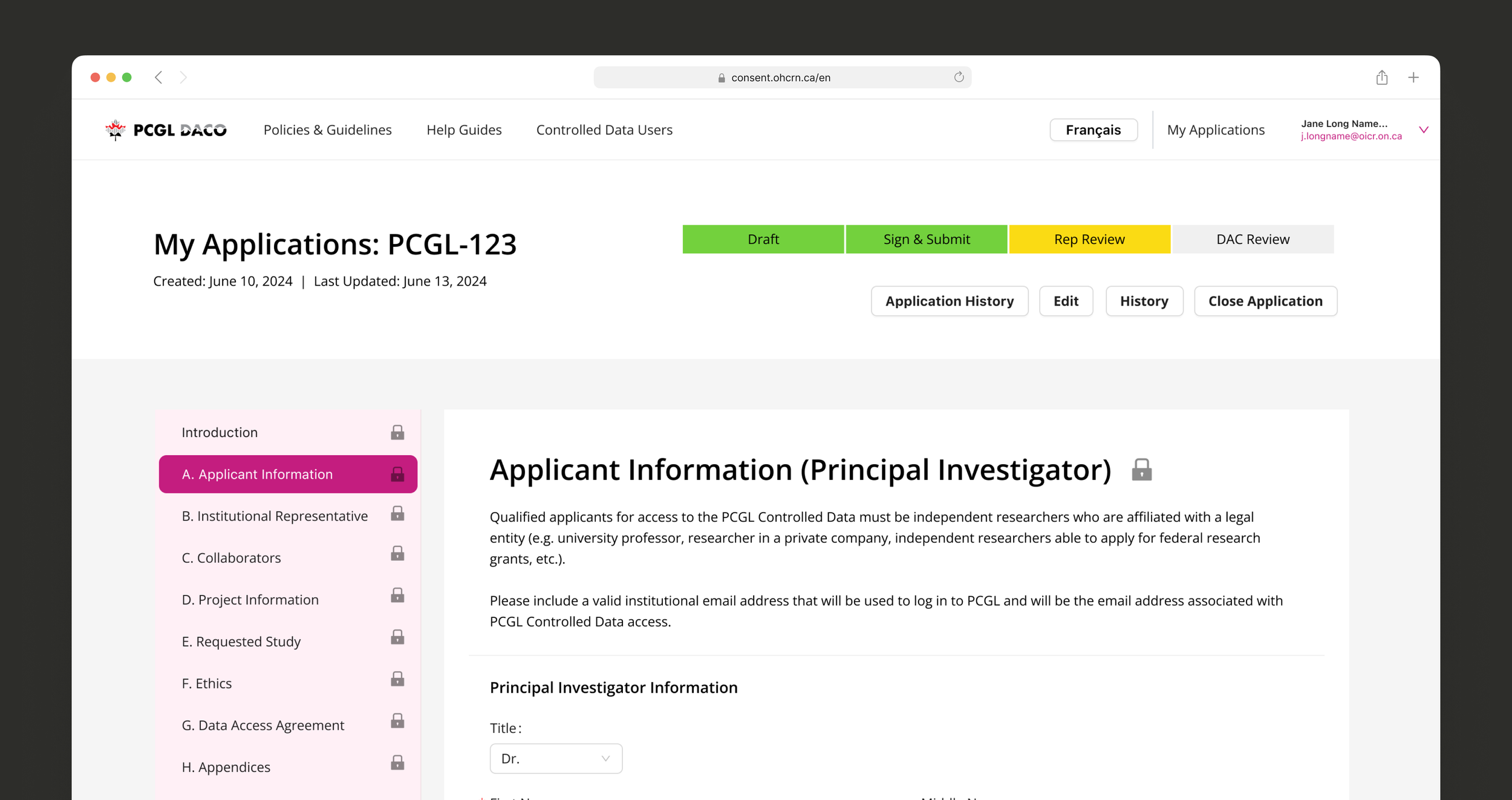
To address both speed and consistency, I led the recommendation to adopt an existing design system rather than creating one from scratch. I customized this system to reflect PCGL’s branding and applied it consistently across screens and workflows.
I worked with business analysts and genomic informaticians to map the full application flow and translated it into wireframes and high-fidelity designs. Using a pre-existing component library allowed me to focus on hierarchy, clarity, and interaction patterns instead of visual reinvention.
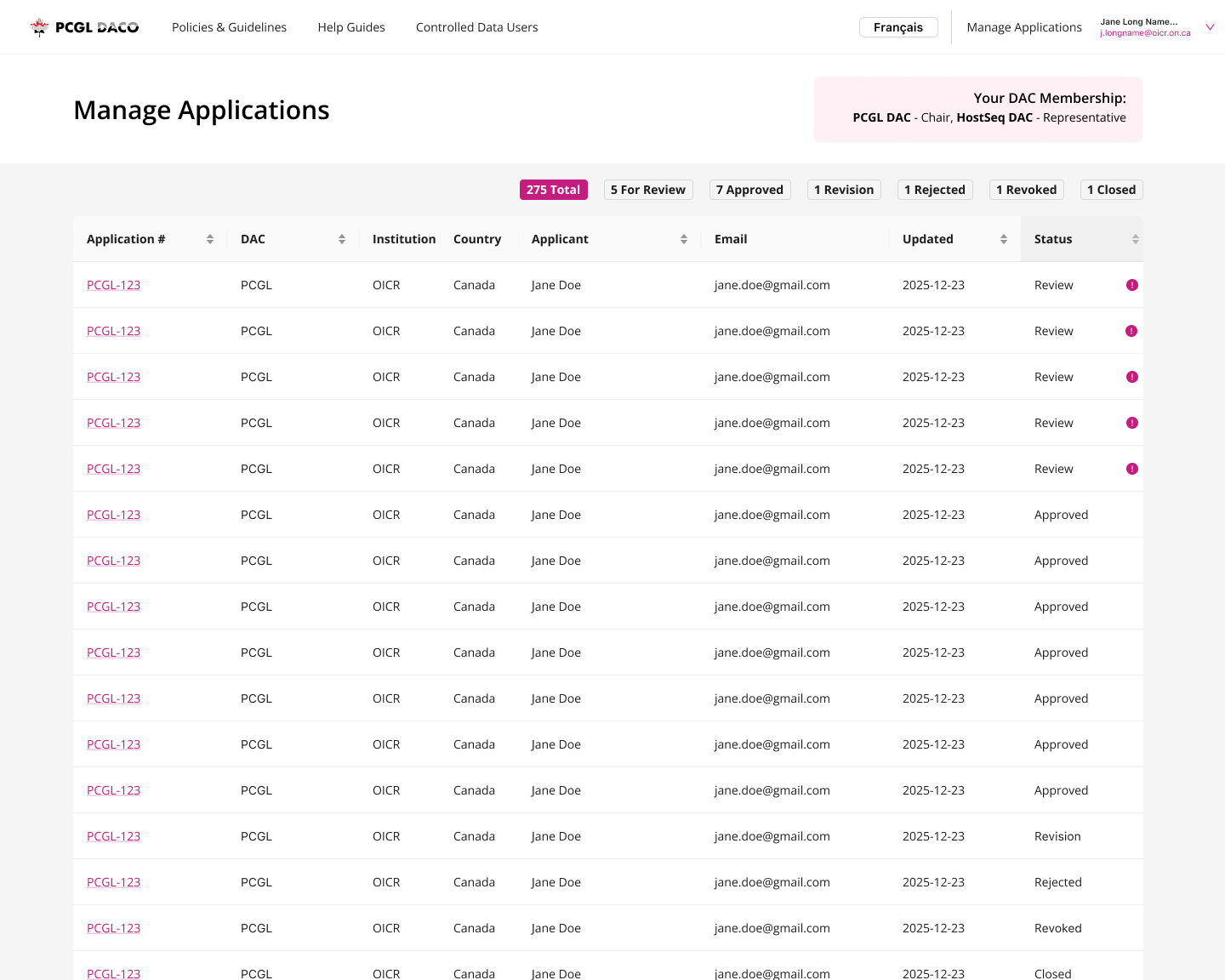
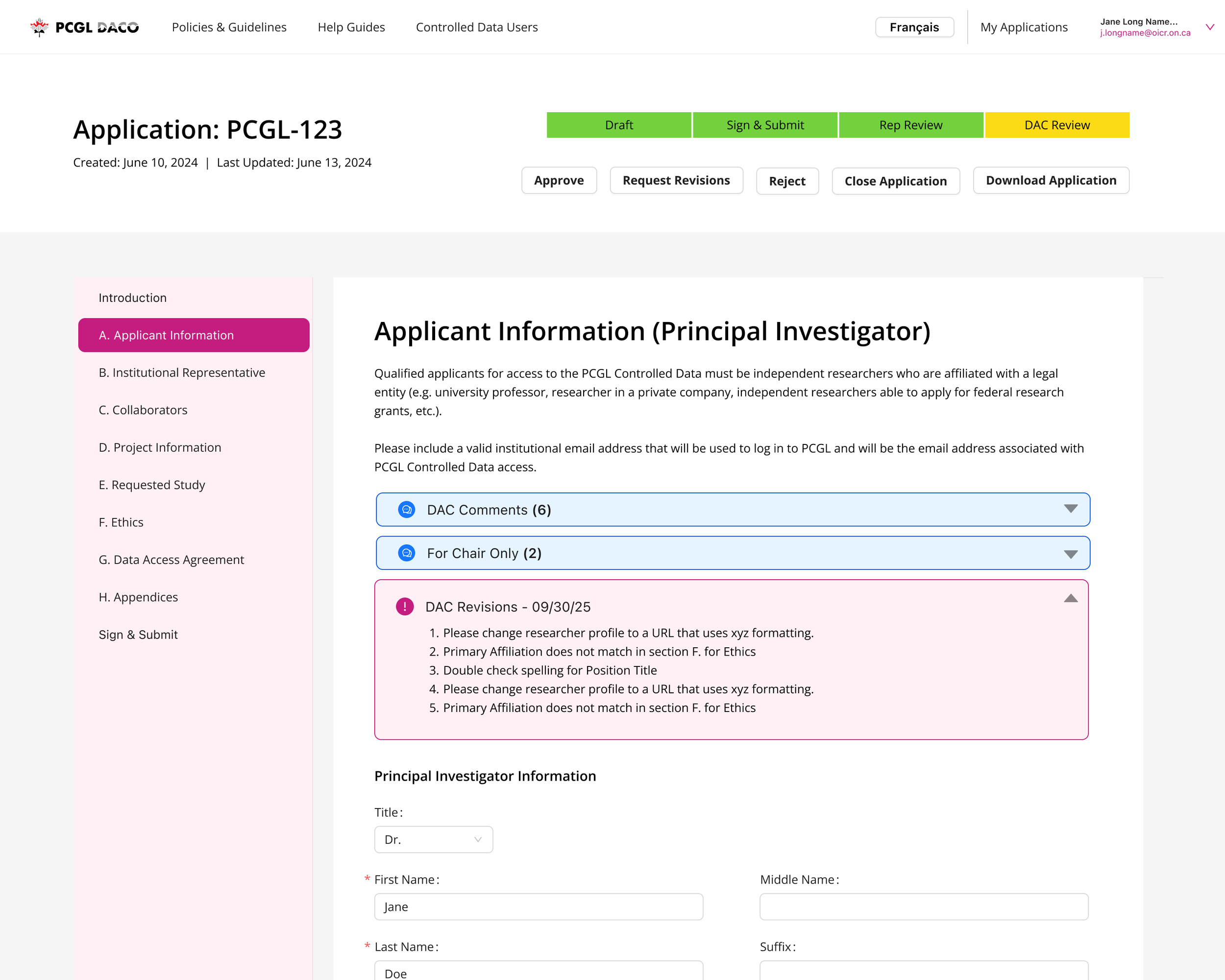
We redesigned the experience so that key interactions lived inside the product rather than in email. This included:
an internal messaging system for applicant feedback
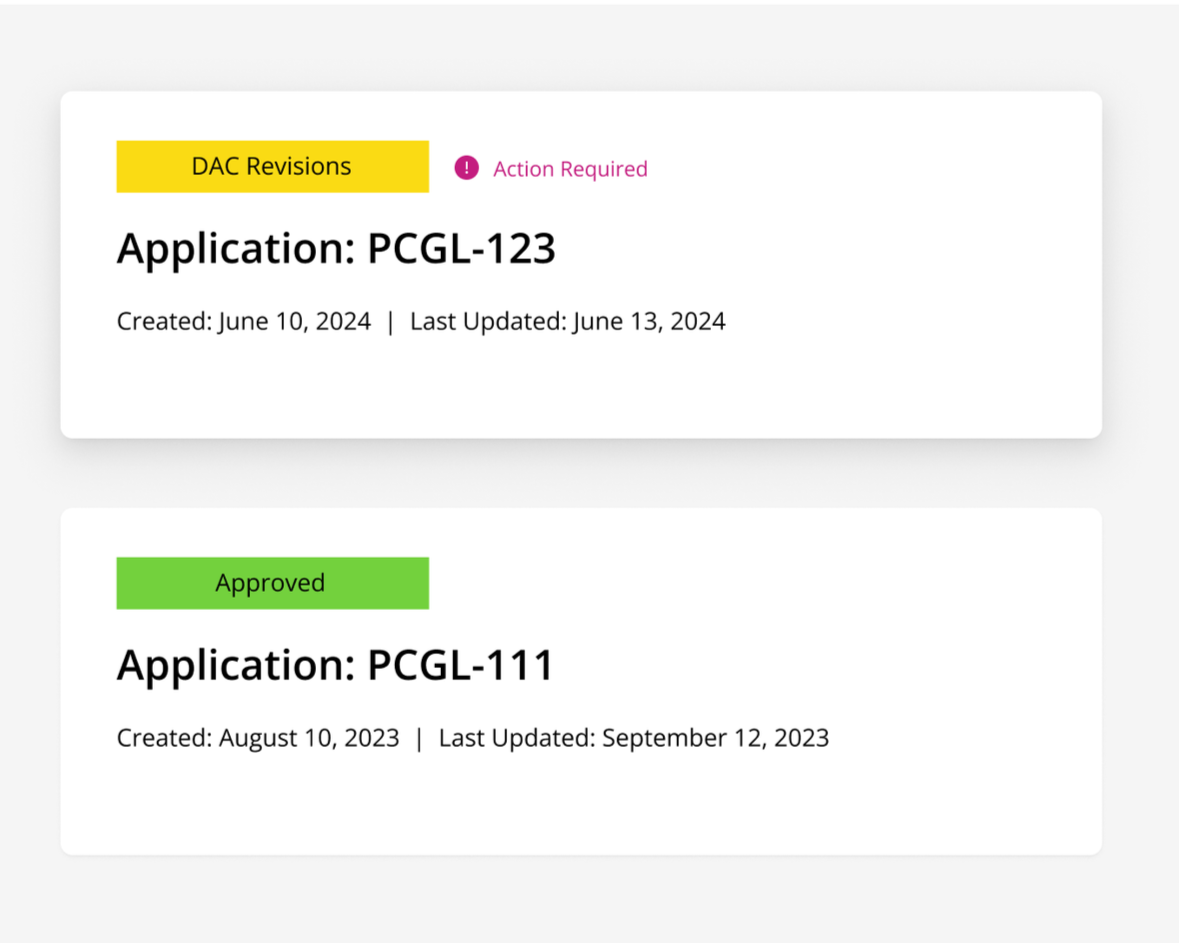
profile-level notifications to surface when action was required
tools for administrators to leave notes for each other within the platform
These changes reduced manual coordination and made the application process easier to follow for both applicants and reviewers.
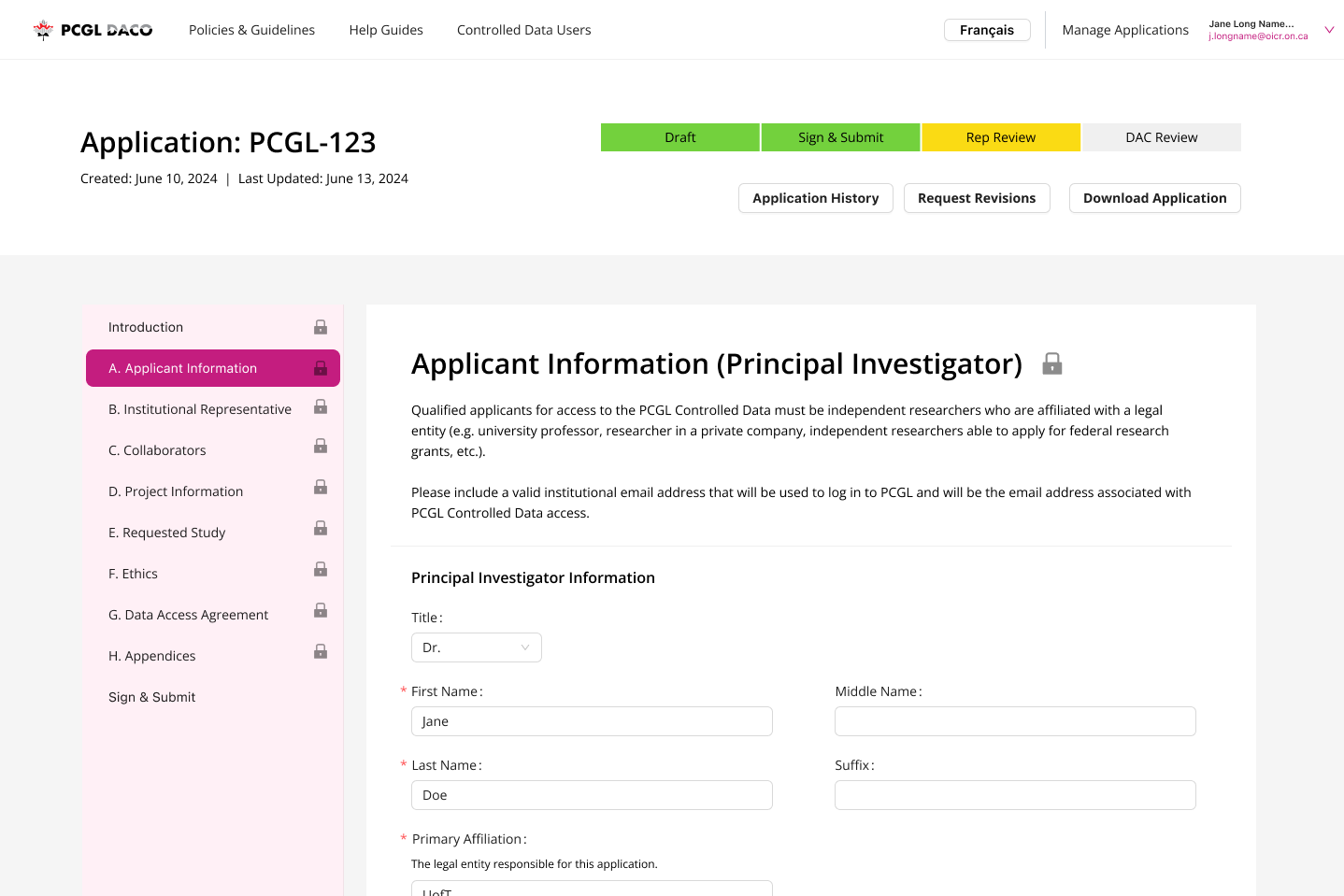
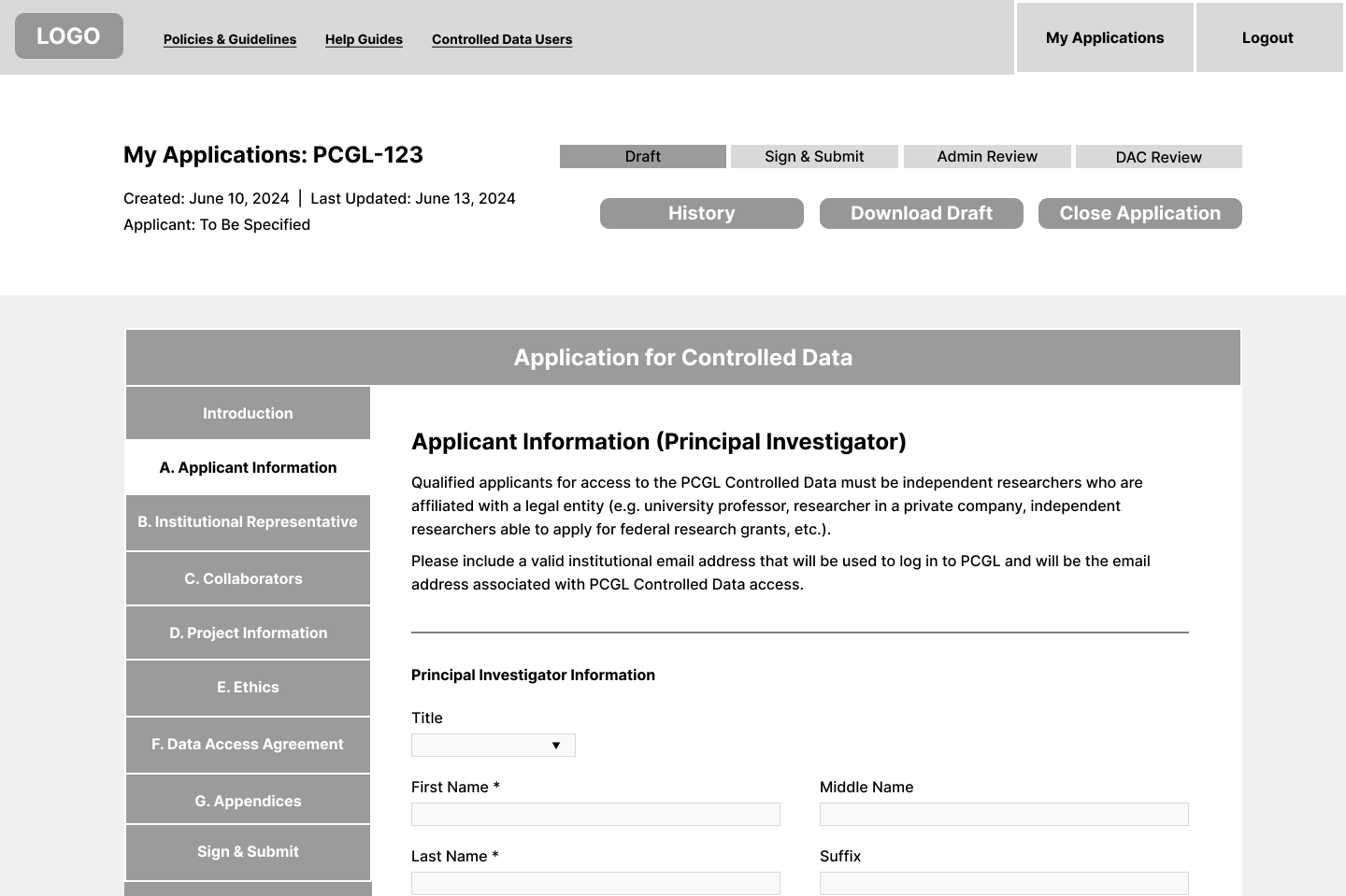
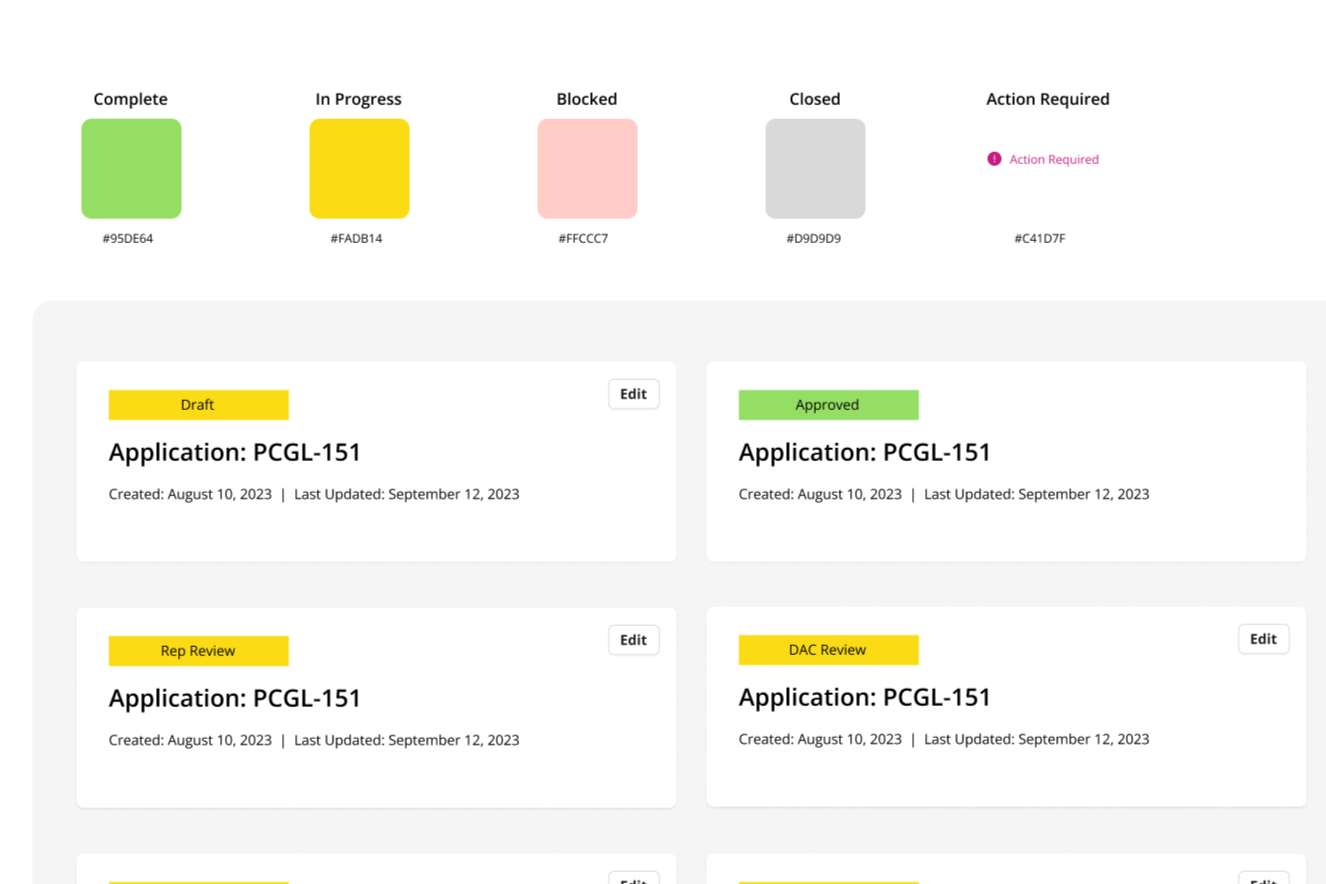
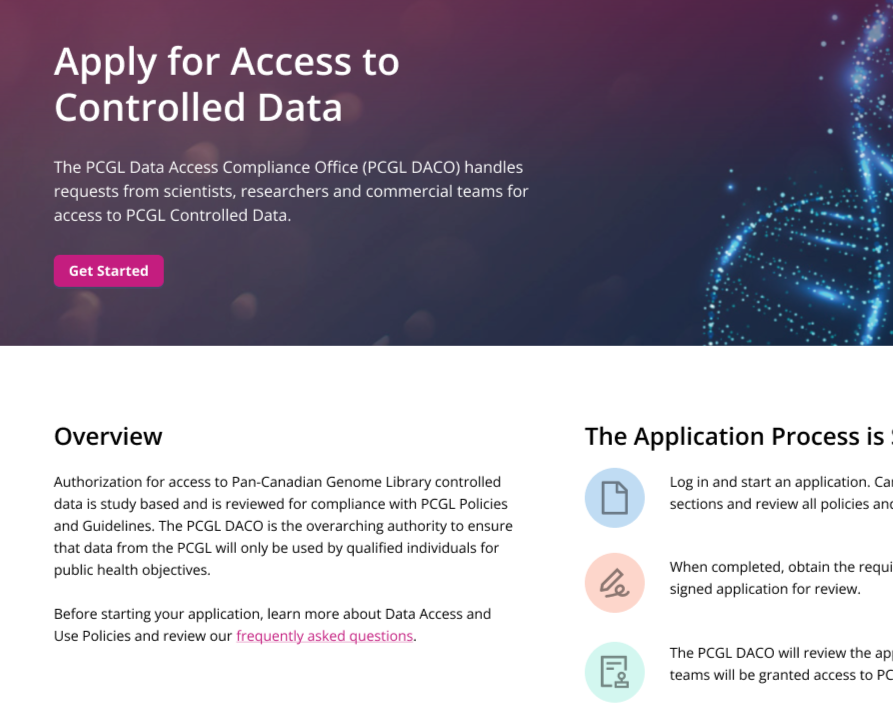
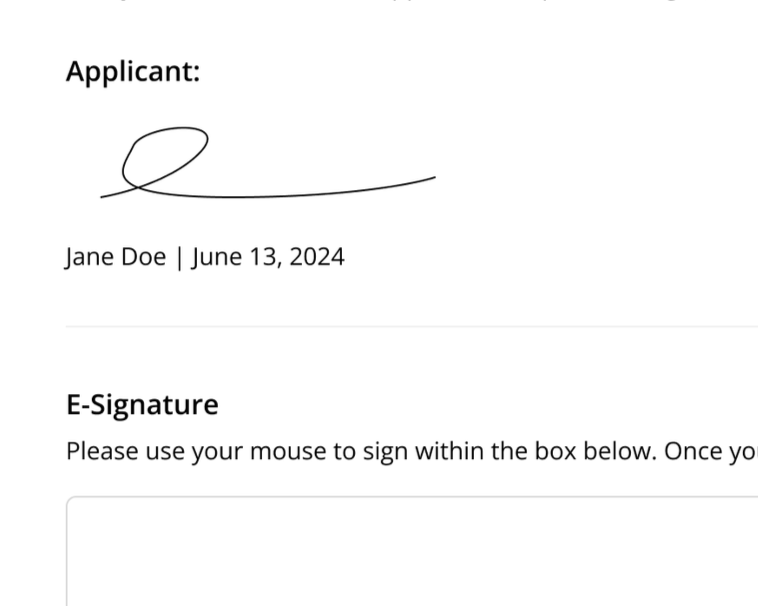
Screenshots of wireframes and mockups at various stages developed from a customized design system.
Outcome
DACO is scheduled to launch in April 2026 as part of the broader PCGL initiative. The design system approach enabled multiple teams to design and build in parallel while maintaining a consistent interface and interaction model.
Although formal user testing was limited, the redesign directly addressed known issues from the previous system and established a branded UI foundation that is now being used by other PCGL teams for their products.